Blackjack's Shift From Tavern Tables to Algorithmic Tournament Circuits: Rule Adaptations Across Eras
Katja Hoffmann · Aug 2, 2026
Blackjack's Shift From Tavern Tables to Algorithmic Tournament Circuits: Rule Adaptations Across Eras
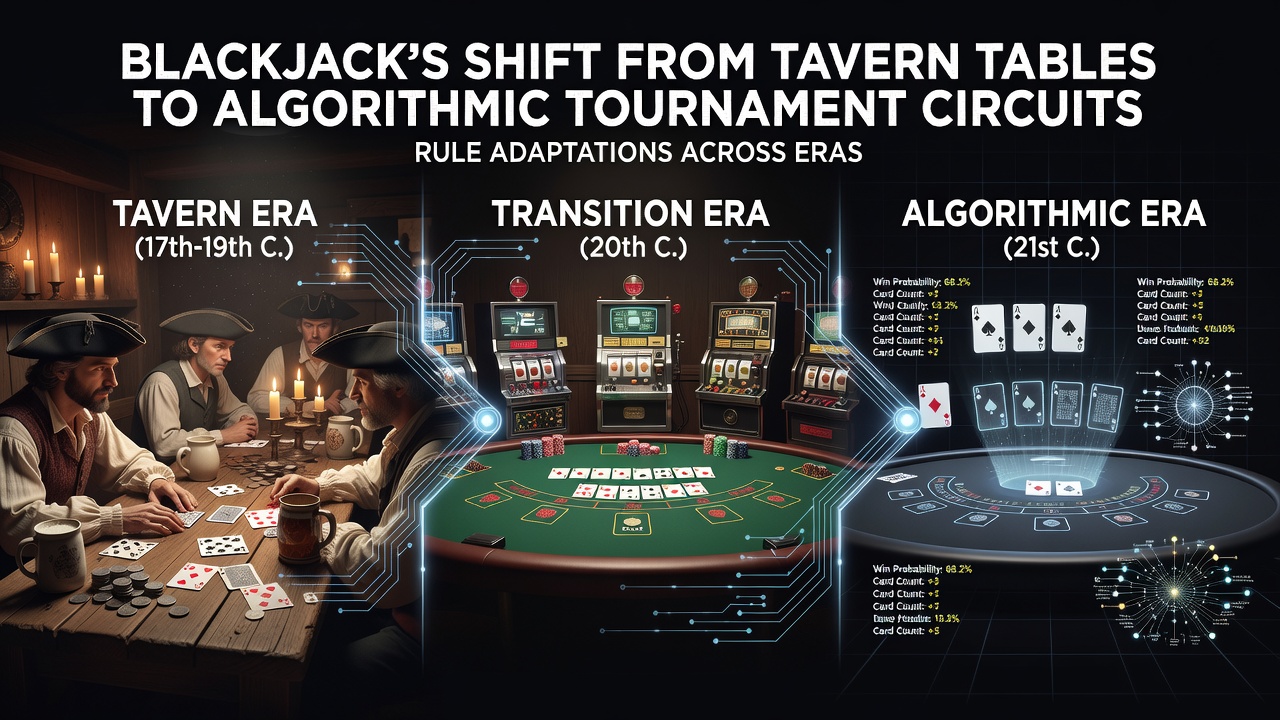
Blackjack emerged in European taverns during the 1700s as a simple game known as vingt-et-un in France, where players aimed for a total of 21 with payouts structured around even money returns on most hands and specific bonuses for certain combinations, while tavern keepers acted as dealers who stood on all 17s and above according to records preserved by early gaming historians.
Rule Foundations in Tavern and Early Casino Settings
Observers note that these initial rules emphasized straightforward play without options like doubling down or splitting pairs in many establishments, yet regional variations appeared quickly as the game spread to England and the American colonies where additional actions such as insurance bets on dealer aces entered common practice by the early 1800s. Data from period documents indicate that house edges fluctuated based on whether dealers hit or stood on soft 17, with tavern formats often favoring the house through restricted player choices that limited strategic depth compared to later casino adaptations.
By the mid-1900s casino operators in Nevada formalized many of these elements through standardized decks and table layouts, introducing surrender options in some venues while maintaining core payout structures of 3-to-2 for natural blackjacks, and researchers tracking these changes found that such adjustments altered long-term expected values across different jurisdictions without altering the fundamental objective of beating the dealer without exceeding 21.
Transition to Regulated Casino Environments and Tournament Formats
Regulatory bodies in the United States began documenting these shifts more systematically after the 1970s as Atlantic City and other markets opened, where rules like multiple deck shoes and continuous shuffling machines reduced opportunities for certain player strategies while preserving core mechanics, and figures from the Nevada Gaming Control Board archives show consistent tracking of how penetration levels and reshuffle protocols influenced overall game returns in multi-table settings.
What's interesting here is how tournament circuits adapted these foundations when events moved beyond single tables, with organizers implementing blind structures and chip stack resets that required rule tweaks such as mandatory all-in protections or adjusted payout ladders to maintain fairness across multiple rounds, while early digital platforms in the 2000s mirrored many land-based constraints yet introduced algorithmic verification for hand resolution to prevent disputes.
Algorithmic Adaptations in Contemporary Tournament Circuits
Modern tournament circuits rely on algorithmic systems to manage deck composition, random number generation, and real-time rule enforcement across live dealer and virtual formats, with adaptations including dynamic insurance thresholds calibrated to specific payout algorithms and multi-hand configurations that interact differently with regional regulations compared to traditional single-hand play. Those who've studied these platforms observe that sequential hand signals evolved into standardized digital inputs, allowing consistent application of fundamental strategy charts even as deck management protocols shifted from physical cuts to software-driven penetration limits that recalibrate expected values based on jurisdiction.
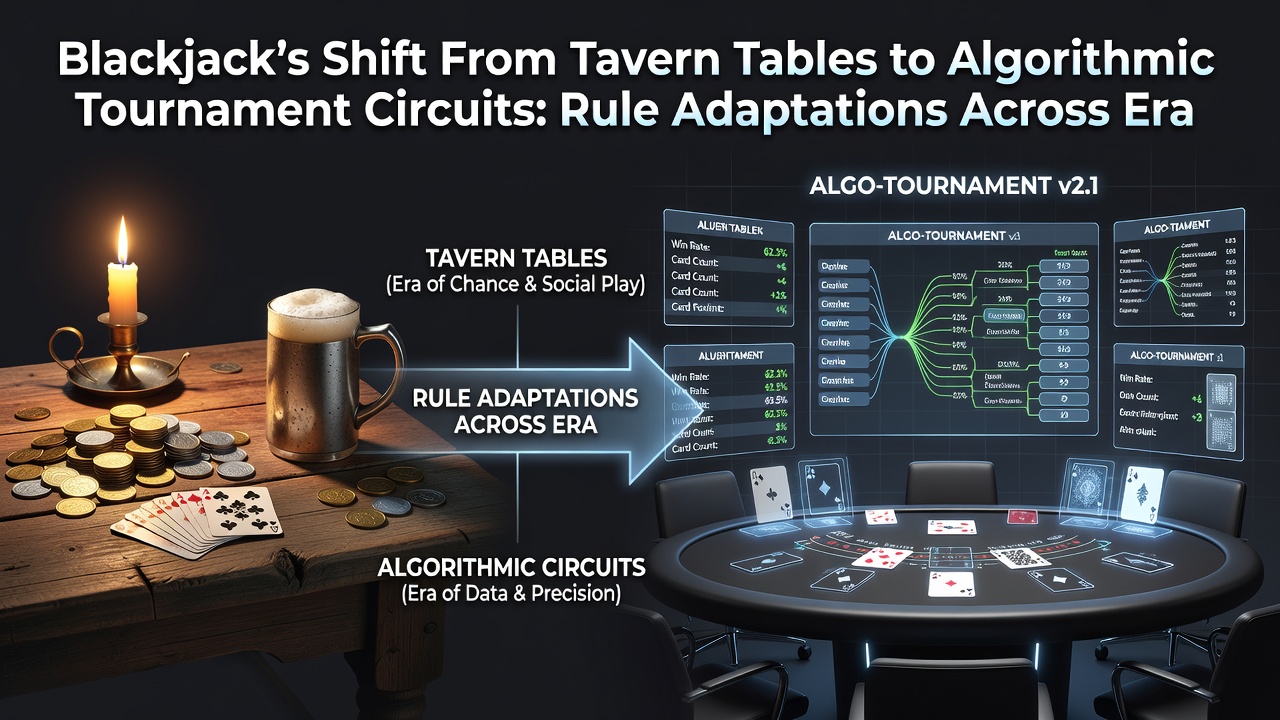
Industry reports from sources like the American Gaming Association highlight how side bet mechanics integrate with bankroll tracking systems in multi-format events, creating interconnected patterns where table position sequencing affects strategic decisions in simulated multi-player environments, and academic studies from institutions such as the University of Nevada have mapped mathematical links between fundamental strategy variations across in-person and remote platforms without altering the base probability structures.
Yet the reality is that these algorithmic circuits maintain continuity with earlier eras through preserved core rules like standing on hard 17 while layering new constraints such as time-limited decisions and automated verification that reduce human error in high-stakes circuits, and data indicates that regional shuffling protocols continue to intersect with deck penetration thresholds to influence long-term outcomes across digital networks.
Conclusion
Rule adaptations across eras reflect ongoing responses to technological and regulatory demands, from tavern simplicity to algorithmic precision, with evidence showing sustained focus on balancing player options against house protections in both physical and virtual tournament contexts, and ongoing developments in platform standards continue to shape how these games operate in August 2026 environments without disrupting established mathematical foundations.