From Riverboat Origins to Algorithmic Tables: How Historical Shuffling Protocols Reshaped Payout Patterns in Global Digital Blackjack Events
Gisela Koch · Oct 30, 2026
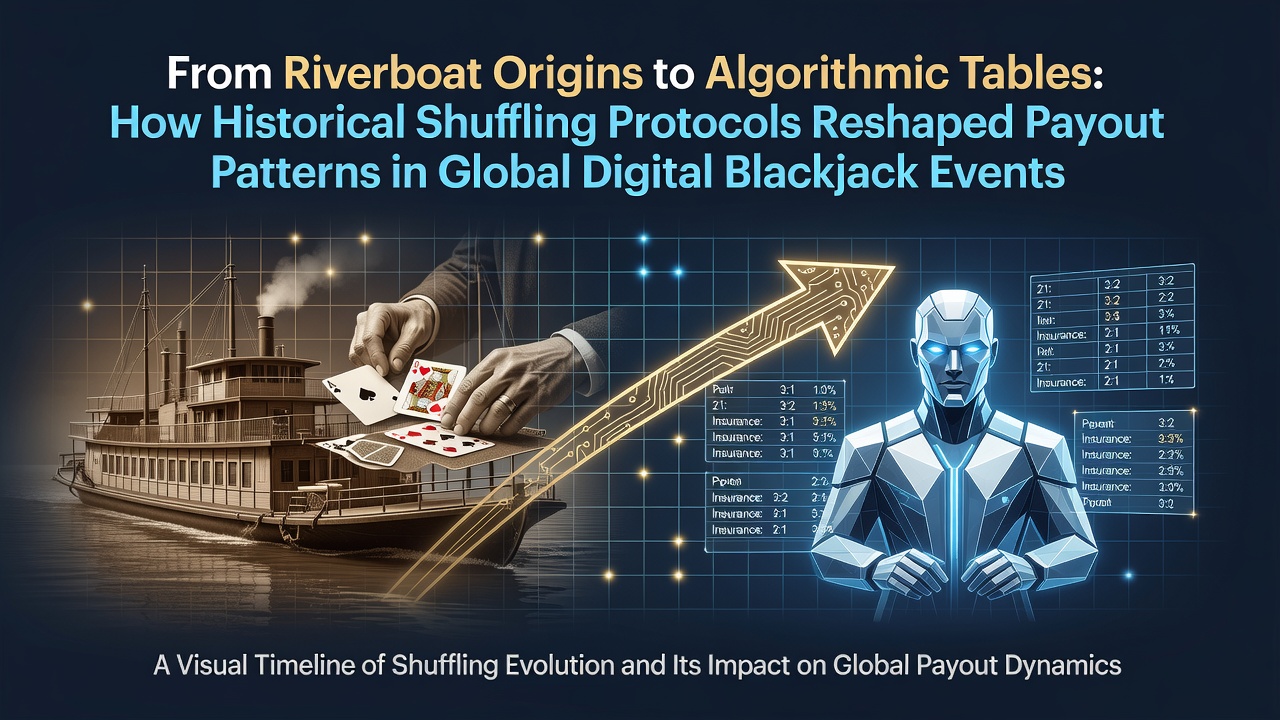
From Riverboat Origins to Algorithmic Tables: How Historical Shuffling Protocols Reshaped Payout Patterns in Global Digital Blackjack Events
Riverboat gamblers on the Mississippi in the 1800s relied on manual shuffling methods that mixed decks between hands, and those techniques established early standards for randomness that later influenced how digital systems calculate returns across online platforms. Data from historical gaming records show that physical shuffles often left residual patterns because dealers used overhand or riffle techniques that failed to fully randomize cards after each round. Researchers tracking 19th-century riverboat operations found that such incomplete mixes altered short-term probabilities, which in turn affected payout distributions for players who stayed at tables for extended sessions. Land-based casinos adopted mechanical shufflers in the mid-20th century, and these devices reduced human bias while introducing new variables in deck penetration. Continuous shuffling machines, deployed widely by the 1990s, maintained a steady supply of randomized cards and shortened the window for any observable sequencing. Studies compiled by the Nevada Gaming Control Board indicate that these machines shifted average returns by limiting the number of cards dealt before reshuffling occurred, a change that carried forward into software equivalents used in digital formats.Algorithmic Shuffling in Digital Environments
Online blackjack platforms replaced physical decks with pseudorandom number generators that simulate shuffling protocols drawn from earlier mechanical designs. Programmers incorporated batch shuffle algorithms modeled on riffle methods, and they calibrated these systems to match regulatory requirements for uniformity. Figures from industry reports reveal that RNG implementations produce payout patterns consistent with theoretical expectations when tested over millions of hands, yet minor deviations appear in live tournament settings where multiple players compete simultaneously.
Global operators began integrating these protocols into mobile and desktop events around 2015, and the transition accelerated as jurisdictions updated their digital gaming frameworks. By October 2026 several markets had completed reviews of algorithmic compliance, which prompted refinements in how virtual tables handle multi-deck simulations. Observers note that these updates align payout curves more closely with historical benchmarks from riverboat eras, although the underlying mechanics differ entirely from manual processes.
Regional Variations and Payout Adjustments
European regulators in Malta examined how algorithmic shuffling affects long-term expected values in cross-border tournaments, and their findings prompted operators to adjust seed values for generators at regular intervals. Australian gaming authorities tracked similar data and reported that continuous virtual shuffles produce steadier return rates than batch methods across extended play periods. Canadian provincial oversight bodies documented comparable results when they audited platforms serving international users, confirming that deck composition rules embedded in software mirror the penetration limits once enforced by physical cut cards.
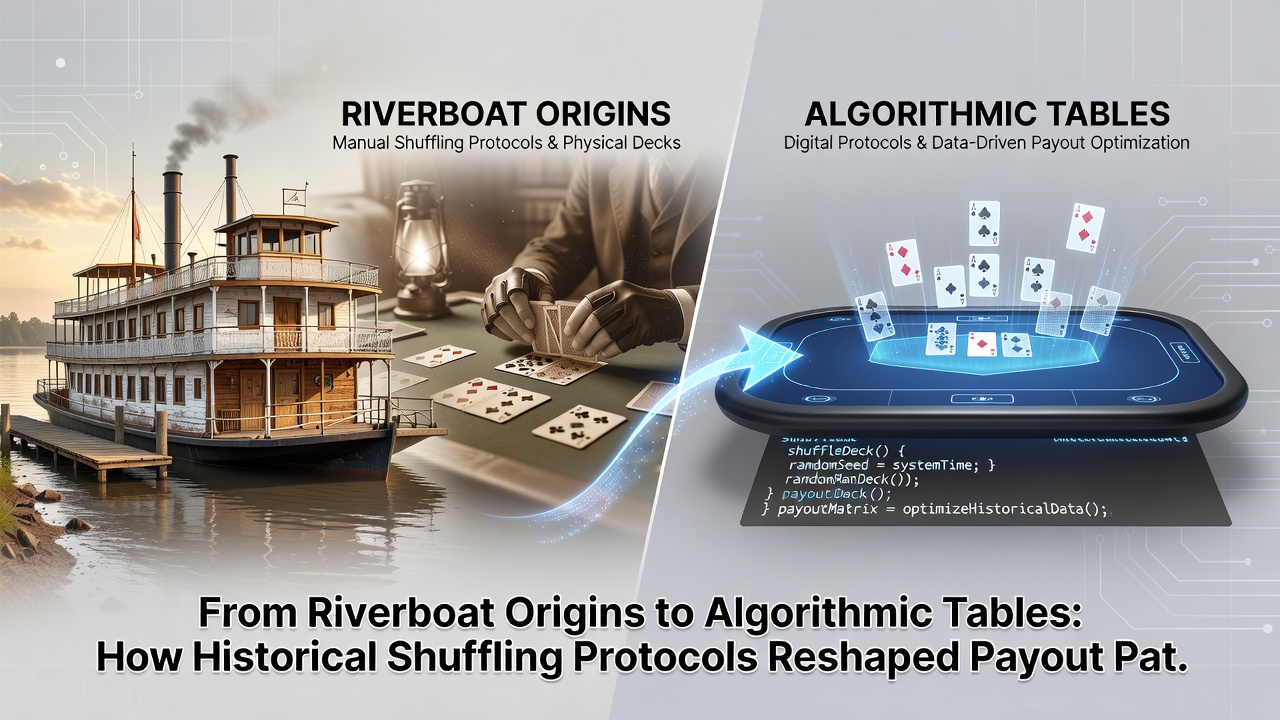
One study released through a university research consortium compared payout distributions across rule sets and found that platforms using frequent algorithmic reshuffles exhibit narrower variance bands than those employing less frequent mixes. Those results align with earlier observations from land-based trials where continuous shuffling machines compressed outcome ranges. Participants in digital events often encounter these calibrated systems during high-volume tournaments, where the software enforces consistent randomization to maintain regulatory standards.
Intersections with Tournament Structures
Multi-player digital events incorporate position-based dealing sequences that echo riverboat traditions of passing cards clockwise, and these sequences interact with shuffling algorithms to shape individual hand outcomes. Data collected from platforms operating in multiple jurisdictions show that table position combined with shuffle frequency can shift bankroll trajectories over hundreds of hands. Analysts examining records from 2024 through 2026 observed that certain configurations produce measurable differences in side-bet returns when algorithmic protocols reset decks at fixed intervals.
Industry associations have compiled reports that link historical shuffling practices to current software parameters, and these documents highlight how payout percentages remain stable when generators receive independent certification. External audits conducted by laboratories in various regions verify that the algorithms replicate the statistical properties of well-mixed physical decks, thereby preserving the payout patterns established over decades of casino operation.
Conclusion
Shuffling protocols evolved from riverboat manual techniques through mechanical devices into algorithmic systems that now govern global digital blackjack events, and each stage introduced measurable effects on payout distributions. Regulatory reviews completed by October 2026 reinforced the need for consistent randomization standards that trace their conceptual roots to earlier physical practices. Available data confirm that these layered developments continue to determine return patterns across platforms operating under diverse jurisdictional requirements.