Tracing the Lineage of Hand-Signaling Protocols from Riverboat Era to Contemporary Online Interface Designs
Katja Hoffmann · Aug 23, 2026
From Steamboat Gestures to Screen Taps: Evolution of Card Table Communication Methods Across Centuries
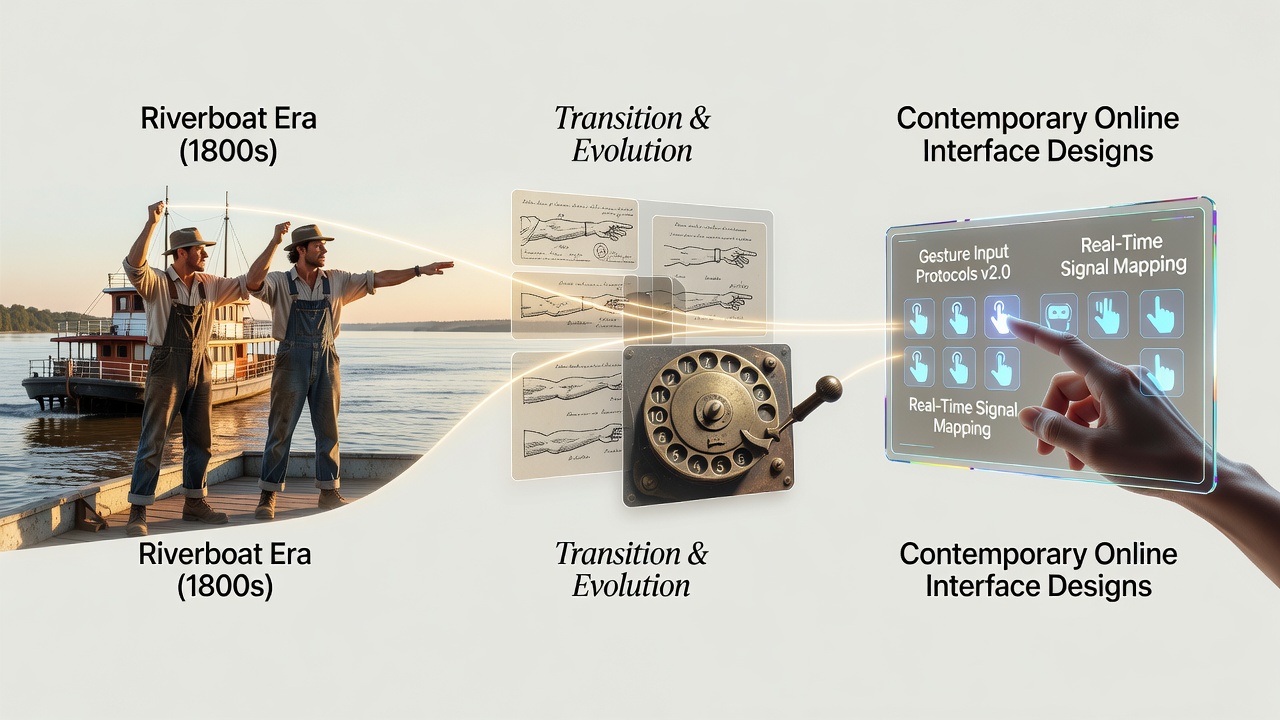
Historians trace the earliest documented hand signals in American card play to the 1830s riverboat culture along the Mississippi, where players developed discreet gestures to convey decisions without verbal announcements that might attract unwanted attention from fellow passengers or crew. These movements emerged because open discussion risked revealing strategies or provoking disputes in confined gambling spaces on vessels that often operated under loose regulations, and researchers from institutions such as the University of Nevada, Las Vegas have cataloged sketches and traveler accounts that illustrate standardized motions for requesting additional cards or declining them. As riverboat traffic expanded through the 1840s and 1850s, these gestures grew more refined to accommodate larger tables and mixed crowds of professionals and amateurs, with observers noting that a simple tap or wave could replace spoken words while maintaining game flow amid the constant motion of the boats. Documentation from period newspapers and diaries shows that signals varied slightly by region, yet core patterns for common actions remained consistent enough for travelers to recognize them across different vessels. By the late 19th century land-based establishments adopted and adapted these practices, incorporating them into formal house procedures that required dealers to recognize player intent through visible motions rather than speech alone, and this standardization helped reduce misunderstandings during high-volume play periods. Gaming historians have recorded how such protocols traveled westward with migrating populations, appearing in mining camp saloons and then in permanent city casinos where space constraints and noise levels made verbal clarity difficult. The transition into the 20th century brought further codification as regulatory bodies in various states began overseeing operations, leading establishments to post visual charts that illustrated accepted signals for consistency across shifts. Data from industry reports compiled by the American Gaming Association indicate that by the 1950s most major venues maintained printed guides for both staff and patrons to ensure uniform interpretation, reducing disputes that could slow table turnover. 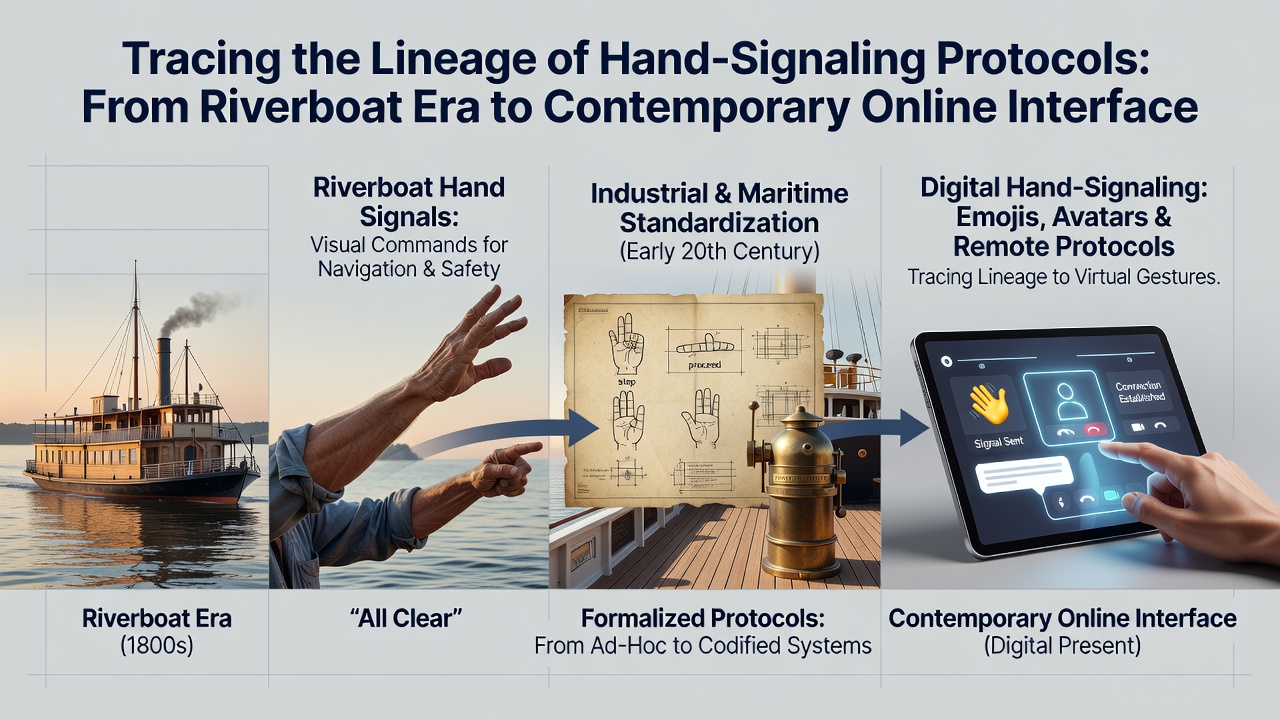 Electronic table games introduced in the 1990s began translating physical motions into button presses and touchpad inputs, preserving the intent of earlier signals while removing the need for live dealer interpretation, and studies published through the Australian Gambling Research Centre document how manufacturers consulted historical records to design interfaces that mirrored familiar gestures for player comfort. Touchscreen implementations in the early 2000s added swipe and tap mechanics that echoed riverboat-era movements, allowing users to communicate choices through actions that felt intuitive rather than entirely novel. Contemporary online platforms integrate gesture recognition via webcam features on select sites, where algorithms interpret user hand movements captured on camera and convert them into game commands, according to technical papers from Canadian research groups focused on human-computer interaction in gaming environments. These systems build directly on earlier analog methods by mapping common physical signals to digital equivalents, and developers have tested variations that accommodate regional differences in how players historically performed the same action. Live dealer streams combine both traditions, displaying video of physical tables while offering digital overlays for remote participants to select signals through clicks that the dealer then acknowledges on screen. Figures from European regulatory summaries reveal that adoption rates for such hybrid interfaces rose steadily through the 2010s as connection speeds improved and hardware became more accessible across different jurisdictions. Design teams continue to reference archival footage and period illustrations when updating mobile applications, ensuring that new gesture libraries maintain continuity with established patterns even as platforms introduce multi-hand options or simultaneous play modes. Research indicates that this lineage supports faster onboarding for users familiar with traditional venues, while also providing accessibility features such as customizable input methods for those who prefer non-standard motions. What's significant is how these protocols have persisted through technological shifts without losing their core function of clear, unambiguous communication between participant and game operator. Observers note that the move from riverboat decks to virtual environments represents an unbroken chain of adaptation rather than a complete reinvention, and institutions tracking gaming history continue to archive both physical demonstrations and digital code repositories that capture each stage of this progression. Conclusion
teh documented path from 19th-century riverboat gestures through regulated casino standards and into algorithm-driven interfaces illustrates a steady refinement process shaped by practical needs and available technology. Sources ranging from academic archives to industry associations confirm that each iteration retained recognizable elements of its predecessors while accommodating new environments and participant expectations.
Electronic table games introduced in the 1990s began translating physical motions into button presses and touchpad inputs, preserving the intent of earlier signals while removing the need for live dealer interpretation, and studies published through the Australian Gambling Research Centre document how manufacturers consulted historical records to design interfaces that mirrored familiar gestures for player comfort. Touchscreen implementations in the early 2000s added swipe and tap mechanics that echoed riverboat-era movements, allowing users to communicate choices through actions that felt intuitive rather than entirely novel. Contemporary online platforms integrate gesture recognition via webcam features on select sites, where algorithms interpret user hand movements captured on camera and convert them into game commands, according to technical papers from Canadian research groups focused on human-computer interaction in gaming environments. These systems build directly on earlier analog methods by mapping common physical signals to digital equivalents, and developers have tested variations that accommodate regional differences in how players historically performed the same action. Live dealer streams combine both traditions, displaying video of physical tables while offering digital overlays for remote participants to select signals through clicks that the dealer then acknowledges on screen. Figures from European regulatory summaries reveal that adoption rates for such hybrid interfaces rose steadily through the 2010s as connection speeds improved and hardware became more accessible across different jurisdictions. Design teams continue to reference archival footage and period illustrations when updating mobile applications, ensuring that new gesture libraries maintain continuity with established patterns even as platforms introduce multi-hand options or simultaneous play modes. Research indicates that this lineage supports faster onboarding for users familiar with traditional venues, while also providing accessibility features such as customizable input methods for those who prefer non-standard motions. What's significant is how these protocols have persisted through technological shifts without losing their core function of clear, unambiguous communication between participant and game operator. Observers note that the move from riverboat decks to virtual environments represents an unbroken chain of adaptation rather than a complete reinvention, and institutions tracking gaming history continue to archive both physical demonstrations and digital code repositories that capture each stage of this progression. Conclusion
teh documented path from 19th-century riverboat gestures through regulated casino standards and into algorithm-driven interfaces illustrates a steady refinement process shaped by practical needs and available technology. Sources ranging from academic archives to industry associations confirm that each iteration retained recognizable elements of its predecessors while accommodating new environments and participant expectations.
Historians trace the earliest documented hand signals in American card play to the 1830s riverboat culture along the Mississippi, where players developed discreet gestures to convey decisions without verbal announcements that might attract unwanted attention from fellow passengers or crew. These movements emerged because open discussion risked revealing strategies or provoking disputes in confined gambling spaces on vessels that often operated under loose regulations, and researchers from institutions such as the University of Nevada, Las Vegas have cataloged sketches and traveler accounts that illustrate standardized motions for requesting additional cards or declining them. As riverboat traffic expanded through the 1840s and 1850s, these gestures grew more refined to accommodate larger tables and mixed crowds of professionals and amateurs, with observers noting that a simple tap or wave could replace spoken words while maintaining game flow amid the constant motion of the boats. Documentation from period newspapers and diaries shows that signals varied slightly by region, yet core patterns for common actions remained consistent enough for travelers to recognize them across different vessels. By the late 19th century land-based establishments adopted and adapted these practices, incorporating them into formal house procedures that required dealers to recognize player intent through visible motions rather than speech alone, and this standardization helped reduce misunderstandings during high-volume play periods. Gaming historians have recorded how such protocols traveled westward with migrating populations, appearing in mining camp saloons and then in permanent city casinos where space constraints and noise levels made verbal clarity difficult. The transition into the 20th century brought further codification as regulatory bodies in various states began overseeing operations, leading establishments to post visual charts that illustrated accepted signals for consistency across shifts. Data from industry reports compiled by the American Gaming Association indicate that by the 1950s most major venues maintained printed guides for both staff and patrons to ensure uniform interpretation, reducing disputes that could slow table turnover.
Electronic table games introduced in the 1990s began translating physical motions into button presses and touchpad inputs, preserving the intent of earlier signals while removing the need for live dealer interpretation, and studies published through the Australian Gambling Research Centre document how manufacturers consulted historical records to design interfaces that mirrored familiar gestures for player comfort. Touchscreen implementations in the early 2000s added swipe and tap mechanics that echoed riverboat-era movements, allowing users to communicate choices through actions that felt intuitive rather than entirely novel. Contemporary online platforms integrate gesture recognition via webcam features on select sites, where algorithms interpret user hand movements captured on camera and convert them into game commands, according to technical papers from Canadian research groups focused on human-computer interaction in gaming environments. These systems build directly on earlier analog methods by mapping common physical signals to digital equivalents, and developers have tested variations that accommodate regional differences in how players historically performed the same action. Live dealer streams combine both traditions, displaying video of physical tables while offering digital overlays for remote participants to select signals through clicks that the dealer then acknowledges on screen. Figures from European regulatory summaries reveal that adoption rates for such hybrid interfaces rose steadily through the 2010s as connection speeds improved and hardware became more accessible across different jurisdictions. Design teams continue to reference archival footage and period illustrations when updating mobile applications, ensuring that new gesture libraries maintain continuity with established patterns even as platforms introduce multi-hand options or simultaneous play modes. Research indicates that this lineage supports faster onboarding for users familiar with traditional venues, while also providing accessibility features such as customizable input methods for those who prefer non-standard motions. What's significant is how these protocols have persisted through technological shifts without losing their core function of clear, unambiguous communication between participant and game operator. Observers note that the move from riverboat decks to virtual environments represents an unbroken chain of adaptation rather than a complete reinvention, and institutions tracking gaming history continue to archive both physical demonstrations and digital code repositories that capture each stage of this progression. Conclusion
teh documented path from 19th-century riverboat gestures through regulated casino standards and into algorithm-driven interfaces illustrates a steady refinement process shaped by practical needs and available technology. Sources ranging from academic archives to industry associations confirm that each iteration retained recognizable elements of its predecessors while accommodating new environments and participant expectations.